Letter Boxed NYT: Rules, How to Play, Strategy, and Daily Answers 2026
Letter Boxed is a daily word chain puzzle published by The New York Times Games. Players use 12 letters arranged on four sides of a square to form connected words. The goal is to cover all 12 letters in the fewest words possible. You can play the Letter Boxed game for free, with unlimited daily access and no download required.
What Is Letter Boxed?
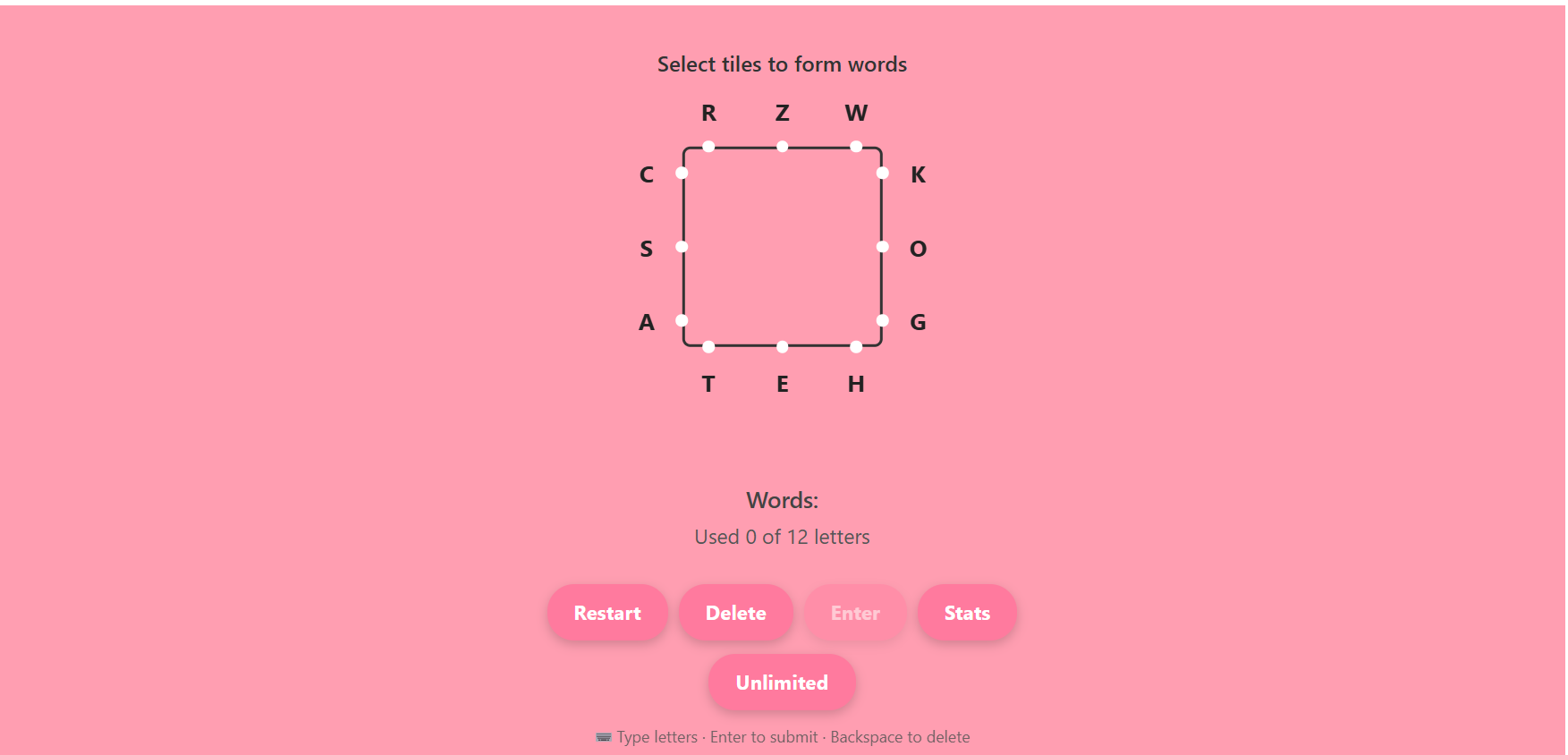
Letter Boxed is a word puzzle created by Sam Ezersky, puzzle editor at NYT Games. The game launched in 2018 as part of the NYT Games suite alongside Wordle and Spelling Bee. Each puzzle features 12 letters placed three per side on a square grid. Players chain words together by ensuring every new word starts with the last letter of the previous one.
How to Play Letter Boxed
To play Letter Boxed, select any letter, build a word by picking letters from different sides, then start each new word with your last letter used.
The four core rules are:
- Each word must contain at least 3 letters.
- No two consecutive letters may come from the same side.
- Each new word must begin with the ending letter of the previous word.
- All 12 letters must appear at least once across the full word chain.
The game accepts unlimited word attempts. It ends when every letter on the board turns from gray to colored, confirming full coverage.
Letter Boxed Rules: Side-Switching Explained
The side-switching rule is the defining mechanic of the NYT Letter Boxed game. If you select a letter from the top side, the next letter must come from the left, right, or bottom side. This rule applies to every letter within a word, not between words. A letter can be reused across multiple words without penalty.
What Dictionary Does Letter Boxed Use?
Letter Boxed uses a curated word list based on the Oxford Dictionary of English, edited by Sam Ezersky to remove proper nouns, abbreviations, and obscure terms.
The NYT does not use a raw, unfiltered dictionary file. Ezersky edits the word list to keep puzzles fair and solvable. The final list excludes:
- Proper nouns (names, places, brands)
- Abbreviations and acronyms
- Hyphenated compound words
- Archaic or highly obscure terms
The word list is not publicly available. Merriam-Webster and the Oxford English Dictionary serve as close references, though exact acceptance varies.
Who Created Letter Boxed?
Sam Ezersky, a puzzle editor at The New York Times, created Letter Boxed. Ezersky also contributes to the NYT Spelling Bee puzzle. He designed Letter Boxed with solutions that feel, in his words, “fun and human” rather than purely algorithmic. The game joined the NYT Games platform between 2018 and 2019. It now ranks among the most played daily puzzles on the platform.
How to Solve Letter Boxed: 6 Proven Strategies
The primary trick to solving Letter Boxed is to target a 2-word solution by using rare letters early and ending your first word on a letter that begins a strong second word. The following strategies reduce word count consistently.
1. Identify Rare Letters First
Locate letters such as J, Q, X, and Z before building any word. These letters appear in fewer English words. Finding a word that uses them early prevents dead ends later in the chain.
2. Use Common Suffixes Strategically
Suffixes including -ING, -ED, -LY, -TION, and -ER connect to many starter letters. Ending a word with a common suffix gives more options for the next word.
3. Plan the Exit Letter Before Committing
The last letter of each word determines all future options. Before entering a word, check which letters can start a new word beginning with that ending letter. Vowels (A, E, I, O, U) as exit letters offer the widest range of follow-up words.
4. Work Backward From Difficult Letters
If the board contains a Q or Z, identify first what letters can end a word that begins a word containing Q or Z. Planning in reverse unlocks solutions that forward-only thinking misses.
5. Prioritize Long Words for the First Move
A single long word that covers 7 or 8 letters leaves only 4 or 5 letters for the second word. This is the fastest path to a 2-word solution. Look for words that cross all four sides of the square.
6. Keep Short Bridge Words Ready
Words like “era,” “ion,” “ate,” and “one” serve as useful connectors between longer words. They use common letters and end on strong vowels. Build a mental list of 3-letter connector words before starting each puzzle.
Letter Boxed Hints: How to Get Help Without Full Answers
NYT Letter Boxed has no built-in hint system. Players seeking letter boxed hints can use these methods without seeing full solutions:
- Check letter coverage. The progress tracker shows uncovered letters. Focus only on those for your next word.
- Reverse direction. If the chain reaches a dead end, try building from the opposite direction.
- Use a word finder. Sites like Merriam-Webster or WordFinder show valid words containing specific letter combinations.
- Visit community forums. Reddit’s r/NYTGames posts daily discussion threads. Most users discuss approach rather than posting full answers immediately.
Letter Boxed Answers: Should You Use Them?
Letter boxed answers are full word chain solutions posted by third-party sites after each daily puzzle release. Most sites publish both a 2-word and a 3-word solution within one hour of the puzzle going live.
Checking answers immediately removes the problem-solving process. A better approach is to attempt the puzzle for 10 to 15 minutes first. Studying past answers builds vocabulary. Words appearing in Letter Boxed solutions, such as “quartz,” “fjord,” or “lynx,” recur in future puzzles. Tracking them improves long-term performance.
The NYT does not publish official answer keys within the game interface.
Today’s Letter Boxed Puzzle
Today’s letter boxed puzzle resets at midnight Eastern Time and is available at letterboxedgames.com for unlimited free play.
Each new day brings a unique 12-letter configuration. Difficulty depends on vowel distribution. Puzzles with vowels spread across all four sides offer more word-building paths. Puzzles with vowels clustered on one or two sides are harder because the side-switching rule limits vowel access. The previous day’s puzzle is no longer playable once the new puzzle loads on the NYT platform.
Letter Boxed Unlimited Free: What It Means
Letter boxed unlimited free refers to playing the puzzle without a paywall or daily limit. On letterboxedgames.com, players access the game freely with no account or subscription required. The NYT platform limits full access to subscribers after a set number of free games per month. Unlimited play lets beginners practice daily without restriction, which accelerates skill development.
Letter Boxed Solver Tools: How They Work
A letter boxed solver is a third-party tool that accepts 12 board letters and returns valid word chain solutions. These tools process letter combinations against dictionary databases. Common solver tools include WordFinderX and WordHippo. Solvers do not access the NYT’s curated word list directly, so some suggestions may not be accepted in the actual game. Using a solver to study word patterns rather than copy answers provides more long-term benefit.
Letter Boxed vs. Other NYT Games
| Feature | Letter Boxed | Wordle | Spelling Bee | Connections |
| Letters on board | 12 | 5 | 7 | 16 words |
| All letters required | Yes | No | No | No |
| Word chaining required | Yes | No | No | No |
| Attempts allowed | Unlimited | 6 | Unlimited | Unlimited |
| Daily reset | Yes | Yes | Yes | Yes |
| Primary skill | Chain thinking | Deduction | Vocabulary depth | Association |
Letter Boxed tests two moves simultaneously: the current word and its exit letter for the next. Wordle tests deduction within a fixed guess limit. Spelling Bee rewards vocabulary depth within 7 constrained letters. Connections tests categorical association rather than spelling ability.
Cognitive Benefits of Solving Letter Boxed Daily
A 2019 study in the International Journal of Geriatric Psychiatry, conducted across 17,000 adults by the University of Exeter and King’s College London, found that regular word puzzle players showed brain function scores equivalent to people 10 years younger in attention, reasoning, and short-term memory tests (Steptoe et al., 2019).
Letter Boxed trains two specific functions:
- Working memory: Players hold the current word chain in mind while planning the next word.
- Cognitive flexibility: The side-switching rule forces consideration of multiple letter paths rather than the first word recognized.
Johns Hopkins Medicine confirms that mentally stimulating activities support neural pathway maintenance in adults over 50 (Johns Hopkins Medicine, 2021).
How to Improve at Letter Boxed Over Time
Tracking word count per puzzle over 30 days shows measurable improvement. Most new players average 4 to 5 words per puzzle. Consistent daily play reduces the average to 2 to 3 words within four to six weeks. Reviewing past solutions on r/NYTGames exposes word combinations not discovered alone. Players who study 10 to 15 past solutions per week gain faster letter recognition in new puzzles.
Frequently Asked Questions
How do you play Letter Boxed?
Select any letter on the square, then build a word by choosing letters from different sides. Start each new word with the last letter you used. Cover all 12 letters to finish. Words must be at least 3 letters long. Proper nouns and abbreviations are not accepted by the game.
What is the trick to solving Letter Boxed in 2 words?
Find a long first word that uses rare letters like J, Q, X, or Z. End it on a letter that begins a second word covering all remaining letters. Use suffixes like -ING or -LY to extend words and cross multiple sides. Planning the second word before entering the first is the key step most players skip.
What dictionary does Letter Boxed use?
Letter Boxed uses a curated word list based on the Oxford Dictionary of English, edited by NYT puzzle editor Sam Ezersky. The list removes proper nouns, abbreviations, and obscure terms. It is not a complete, raw dictionary file. Some valid English words may not be accepted, and some less common words may appear as correct answers.
What are Letter Boxed hints and where can I find them?
Letter Boxed has no built-in hint system on the NYT platform. Players find hints by checking the uncovered letter tracker, using word finder tools like Merriam-Webster, or reading discussion threads on Reddit’s r/NYTGames community. These methods guide your next move without revealing the full answer.
Is Letter Boxed free to play?
Yes. You can play Letter Boxed free with no account or subscription at letterboxedgames.com. The NYT platform offers a limited number of free games per month before requiring a subscription. Unlimited free access lets players practice every day without a paywall.
Who created Letter Boxed?
Sam Ezersky, puzzle editor at The New York Times Games, created Letter Boxed. He launched the game between 2018 and 2019 as part of the NYT Games suite. Ezersky also works on the NYT Spelling Bee puzzle. He designed Letter Boxed so that every puzzle contains at least one 2-word solution that feels logical to human players.
How many letters does Letter Boxed use?
Letter Boxed uses 12 letters per puzzle. Three letters sit on each of the four sides of the square. Each puzzle contains a unique combination of letters chosen by the NYT puzzle team. No two consecutive letters in a word may come from the same side, which is the central constraint that makes the game challenging.